Natives and Buffalos

Lawrence County prehistory is archeologically complex, spanning a wide range of time extending from the earliest known prehistoric time prior to the Paleoindian (ca 12,000-10,500 BC) up to the time of Euro-American settlement in the early nineteenth century. Our area, the central Wabash Valley, was one of the last major unknown archaeological areas of Illinois until the Illinois State Museum made archaeological excavations in the 1960’s.
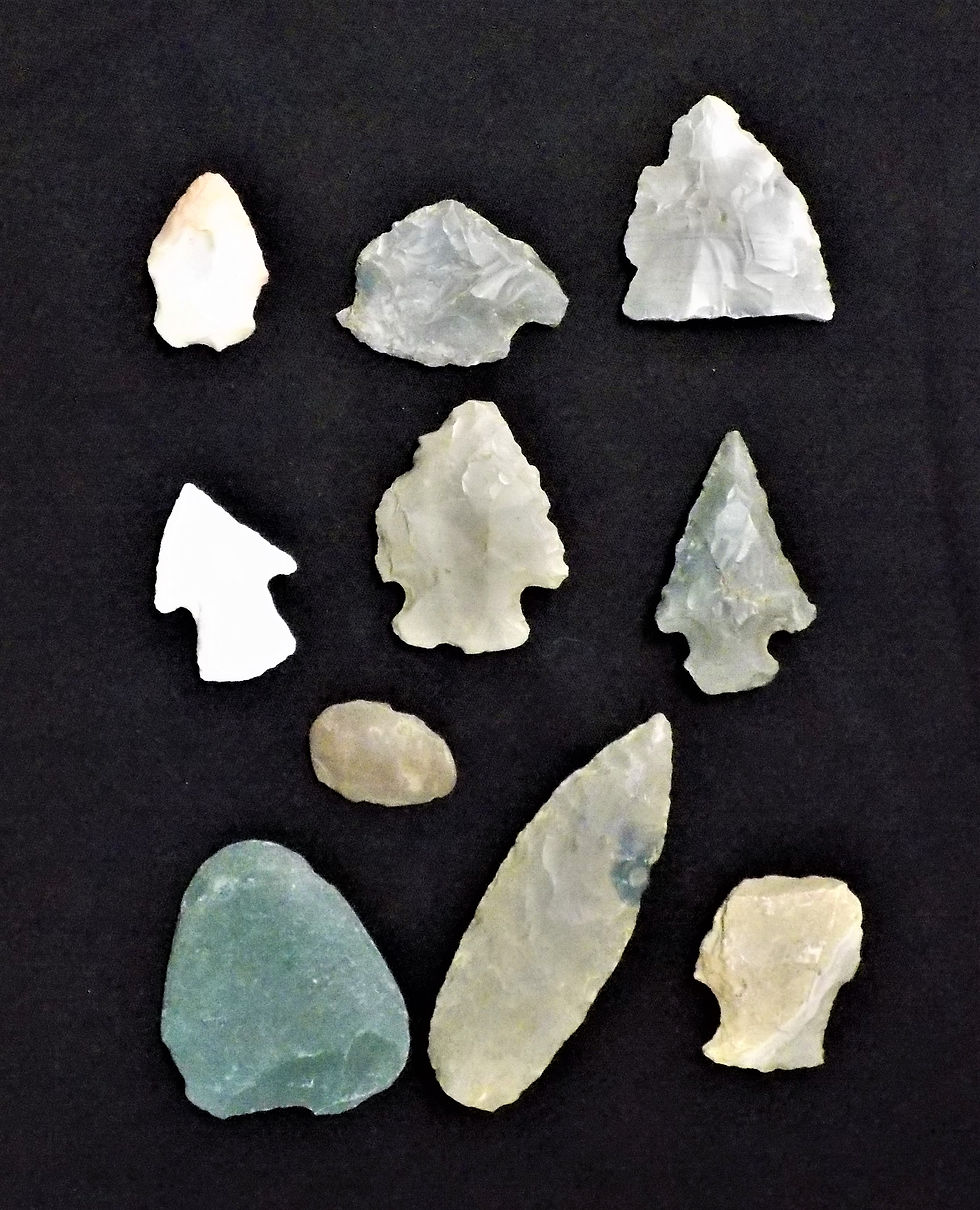
The period that existed until, and after, the Europeans arrived is called the Historic Occupation. Twenty -one archeological sites within the county relate to this period. The tribal groups were all subtribes of the Illinois Nation, (Peoria, Cahokia, Sac, Shawnee, Miami, Piankashaw, and Potawatomi.) Metal tools replaced stone tools and metal arrowheads replaced stone points.
George Croghan’s Journal of 1765 describes a journey along the Wabash River seeing buffaloes, deer and bears in great plenty.” He traveled through a large meadow that he called the Piankashaw ‘s hunting ground.
Constantin Volney in his book “View of the Climate and Soil of the United States, published in 1804, describe the country about 7 1/2 miles east of Post Vincennes in the summer. “The land is decked with high strong plants, which so run against the rider’s legs in the narrow path that the journey out and home will wear out a pair of boots. Thunderstorms, green flies and horseflies are extremely troublesome in summer. Five years ago, you could not cross the meadows without seeing herds of four or five hundred buffaloes, but now there are none. Annoyed by hunters, and still more by the bells of the American cows, they have gone to the other side of the Mississippi, swimming across the river.”
Another writer in 1718 in a memoir stated: “the river Wabash is the one of which the Outatanon are settled. They are five villages…who speak like the Miami…They have a custom that all the other nations do not have, which is to keep their fort very clean, not allowing a single plant. The entire fort is sanded. Their village is situated on a great elevation and has more than two leagues of open ground where they raise their maize, grounds, and melons. And from this elevation as far as one can see there are only prairies which are filled with buffalo.”
But like the buffalo, these earlier civilizations and gone. Continued research is needed to educate today’s people about what came before. Like the earliest hunters and gatherers, we at the Lawrence County Historical Society are also hunters and gatherers, but of information about the past. Please help us in our quest. Pay your dues. Join as a member if you aren't one, and volunteer.